

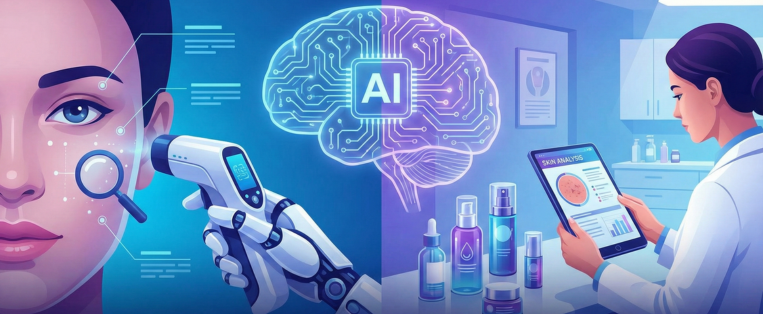
Artificial intelligence has begun reshaping every major branch of medicine, and dermatology is one of the earliest adopters. Skin conditions are among the most common global health issues, yet access to dermatologists remains limited in many regions. AI-powered dermatology aims to bridge this gap by offering faster, more accurate, and more accessible skin assessments.
Why Does AI Dermatology Matters?
Dermatology heavily relies on visual and pattern recognition skills. Diagnosing acne, eczema, psoriasis, or even melanoma depends on identifying subtle changes in skin texture, color, and lesion geometry. AI excels at exactly this: high-precision image analysis.
Modern AI dermatology systems can analyze thousands of skin images, learn patterns of disease progression, and provide assessments that sometimes match or exceed human accuracy. This creates a new era of technology enabling skin care for both clinicians and patients.
Comparison Table: AI Dermatologist vs Human Dermatologist
| Feature | AI Dermatologist | Human Dermatologist |
| Speed | Instant analysis within seconds | Appointment-based, slower |
| Accessibility | Available 24/7 via mobile or web | Limited by clinic hours and location |
| Cost | Low to moderate | Higher cost per visit |
| Accuracy | High for common conditions; depends on dataset quality | Extremely accurate with expert judgment |
| Emotional understanding | None | High empathy and personalization |
| Treatment planning | Offers generalized suggestions | Provides tailored treatment based on medical expertise |
| Follow up | Automated reminders and tracking | Requires scheduling follow up visits |
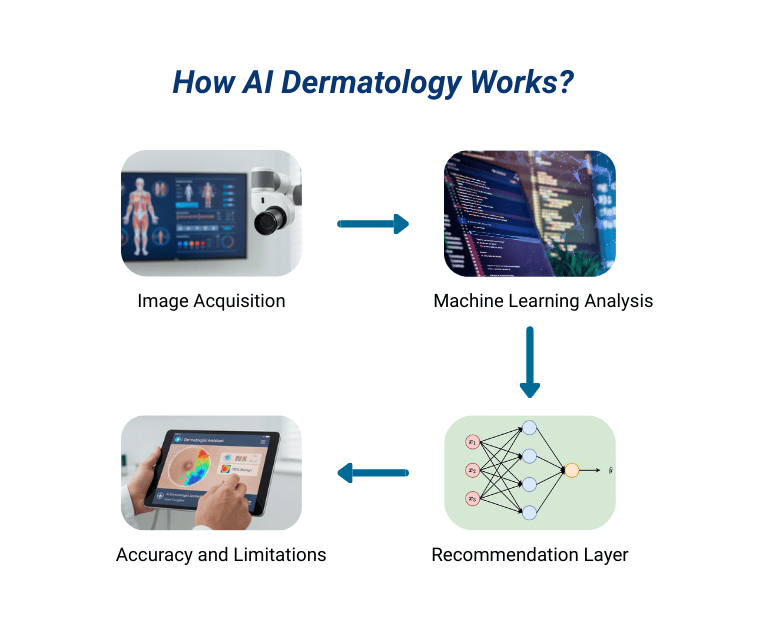
How AI Dermatology Works?
AI-based dermatology tools usually operate through three core technical components:
Image Acquisition
Patients upload photos of their skin concern using a phone camera. Modern models can handle different light conditions, angles, and camera qualities.
Machine Learning Analysis
The AI model compares the uploaded image with a vast database of labeled dermatological images. It evaluates:
- Lesion size and shape
- Color distribution
- Border irregularity
- Texture patterns
- Inflammation markers
Using these signals, the model predicts the most likely diagnosis.
Recommendation Layer
The system then provides actionable suggestions, such as:
- Expected condition (e.g. acne vulgaris, dermatitis, fungal infection)
- Severity score
- Over-the-counter treatments
- When to seek urgent medical consultation
These insights help patients and dermatologists make faster, more informed decisions.
Accuracy and Limitations
AI dermatology systems have demonstrated impressive diagnostic accuracy, especially for common conditions such as acne or eczema. However, accuracy still depends on:
- Quality of the input image
- Diversity of the training dataset
- Skin tone representation
- Rare disease coverage
AI should support, not replace, a qualified dermatologist. Human review remains essential for high-risk conditions like melanoma.
Medical Use-Cases
Teledermatology
AI enhances virtual consultations by providing pre-diagnosis insights before the dermatologist reviews the case.
Early Skin Cancer Detection
AI can highlight suspicious moles or lesions, supporting earlier intervention.
Acne Grading
Automated severity scoring helps dermatologists track treatment response over time.
Personalized Skin Care
Some apps use AI to recommend customized skincare routines based on skin type and condition.
The Future of AI Dermatology: Why It Matters
Artificial intelligence can analyze skin images, detect patterns, and identify possible conditions in seconds. It doesn’t replace dermatologists, but it helps them work faster, catch issues earlier, and offer more personalized treatment plans. For patients, this means quicker answers, fewer clinic visits, and more confidence in their skin health.
In the future, AI dermatology will become as common as using a health app. People will be able to:
• Take a photo and get an instant analysis
• Track changes in moles or acne over time
• Receive personalized skin-care recommendations
• Connect directly with experts when needed
As algorithms improve and more real patient data becomes available, AI will become even more accurate than today. It will support early detection of serious conditions like melanoma, manage long-term issues like acne or eczema, and make skincare more accessible globally.
FAQs
Q1. What is an AI dermatologist?
A: An AI dermatologist is a software system that analyzes skin images using artificial intelligence to identify potential conditions, track changes, and support clinical decisions.
Q2. Is an AI dermatologist accurate?
A: AI dermatology models are highly accurate for common conditions like acne, pigmentation, and moles, especially when trained on large datasets. They support, not replace, human specialists.
Q3. Can AI dermatology replace real dermatologists?
A: No. AI provides fast screening and guidance, but final diagnosis and treatment still require certified dermatologists.
Q4. How does an AI dermatologist work?
A: It uses machine learning algorithms to detect patterns in images, compare them with thousands of labeled examples, and predict the most likely skin issues.
Q5. Is AI dermatology safe to use?
A: Yes. When used responsibly, it offers reliable early detection and risk assessment. It is especially helpful for remote users or those with limited access to specialists.
Q6. Can I use an AI dermatologist on my phone?
A: Many platforms offer mobile apps that allow users to capture a photo and instantly receive a preliminary skin analysis.