

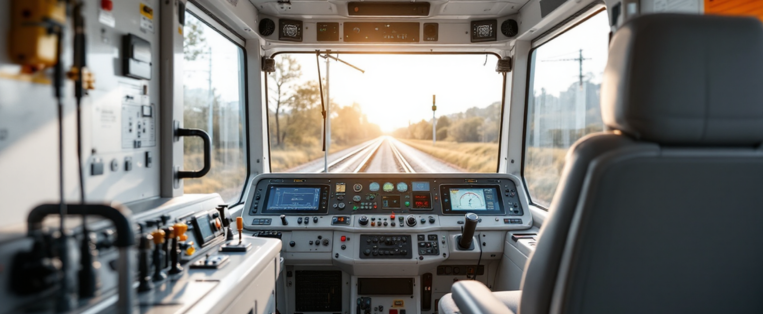
A locomotive engineer is a highly skilled professional responsible for operating trains safely and efficiently. With global rail networks expanding, the demand for trained locomotive engineers is steadily increasing. This guide explains how to become a locomotive engineer, the qualifications required, career path, and real-world engineering relevance.
What Is a Locomotive Engineer?
A locomotive engineer operates freight or passenger trains, monitors control systems, manages speed, observes signals, and ensures compliance with railway safety regulations. Unlike general train operators, a locomotive engineer holds advanced technical responsibility for the entire locomotive system.
Why Choose a Career as a Locomotive Engineer?
Becoming a locomotive engineer offers long-term job security, competitive salaries, and strong engineering relevance.
Key advantages include:
- Stable government or private-sector employment
- Hands-on engineering application
- Strong demand in transport infrastructure
- Clear promotion pathways
For students with mechanical, electrical, or industrial engineering backgrounds, locomotive engineer roles align closely with applied engineering principles.
Educational Requirements to Become a Locomotive Engineer
Minimum Education
To become a locomotive engineer, most rail authorities require:
- High school diploma (Science preferred)
- Strong mathematics and physics fundamentals
Engineering Advantage
Candidates with:
- Mechanical Engineering
- Electrical Engineering
- Mechatronics Engineering
have a competitive edge when applying for locomotive engineer training programs.
Required Skills for a Locomotive Engineer
A successful locomotive engineer must possess both technical and operational skills:
- Mechanical system understanding
- Electrical traction knowledge
- Signal interpretation
- Safety compliance
- Decision-making under pressure
These skills directly overlap with core engineering competencies.
Training and Certification Process
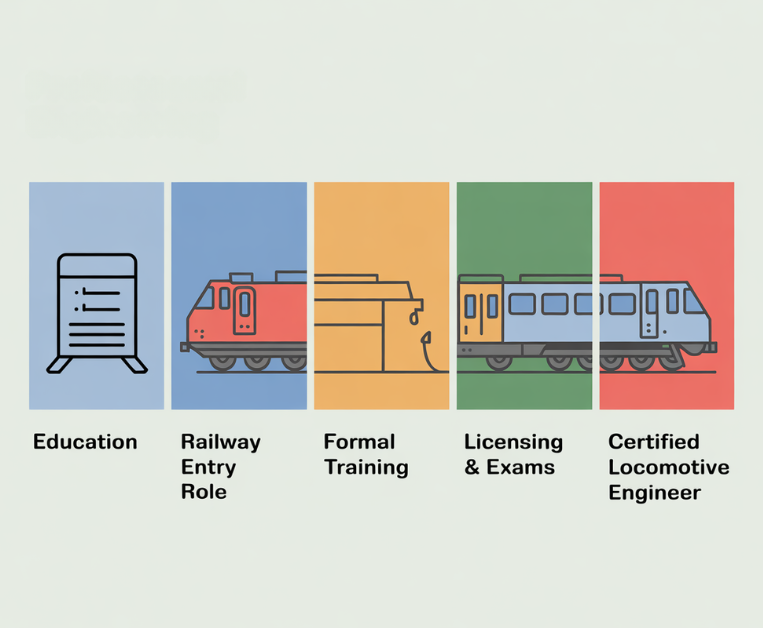
Step 1: Railway Employment
Most locomotive engineers start as:
- Train assistants
- Yard operators
- Technicians
Step 2: Formal Locomotive Engineer Training
Training includes:
- Classroom instruction
- Simulator-based learning
- On-track supervised operation
Step 3: Licensing and Certification
To qualify as a locomotive engineer, candidates must pass:
- Medical and vision tests
- Written technical exams
- Practical driving assessments
Career Progression of a Locomotive Engineer
A locomotive engineer can advance to:
- Senior locomotive engineer
- Train operations supervisor
- Railway operations manager
- Rail safety inspector
Engineering graduates often transition into system design or railway project management roles.
Salary Outlook for a Locomotive Engineer
The salary of a locomotive engineer varies by region and experience.
Average estimates:
- Entry-level: Competitive technical wages
- Mid-career: Strong growth with experience
- Senior level: High earning potential with benefits
Railway engineers involved in system optimization earn additional allowances.
Engineering Case Study (Internal Linking Opportunity)
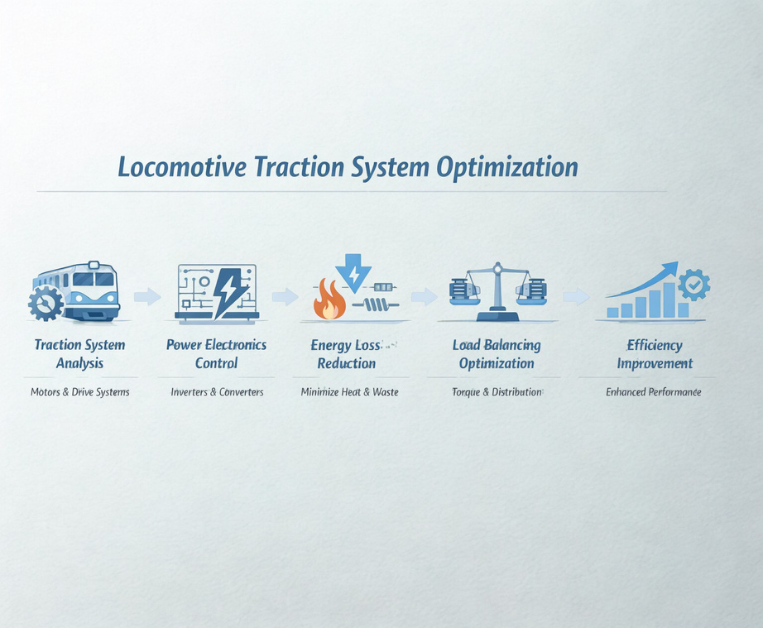
Case Study: Locomotive Traction System Optimization
In a recent mechanical engineering case study, engineers analyzed diesel-electric locomotive traction efficiency. The project focused on:
- Power electronics control
- Energy loss minimization
- Load balancing algorithms
This case study demonstrates how locomotive engineers apply engineering theory in real railway operations.
(Internal link suggestion: “Power Electronics in Railway Traction Systems – Engineering Case Study”)
Is a Locomotive Engineer a Good Career for Engineering Students?
Yes. For students interested in applied engineering, becoming a locomotive engineer provides:
- Real-world system operation exposure
- Safety-critical engineering experience
- Infrastructure-scale problem-solving
A locomotive engineer role bridges theory and large-scale industrial practice.
Final Thoughts
Becoming a locomotive engineer requires dedication, technical understanding, and structured training. With expanding rail infrastructure and smart transportation systems, the locomotive engineer profession remains a highly respected and future-proof career especially for engineering graduates.
FAQs
Q1. Do you need an engineering degree to become a locomotive engineer?
A: No, an engineering degree is not mandatory. Most rail authorities require a high school diploma with strong science fundamentals. However, candidates with mechanical, electrical, or mechatronics engineering backgrounds have a significant advantage during training and selection.
Q2. How long does it take to become a locomotive engineer?
A: The process typically takes 1 to 3 years, depending on the country, rail operator, and training program. This includes classroom instruction, simulator training, on-the-job experience, and certification exams.
Q3. What skills are most important for a locomotive engineer?
A: Key skills include mechanical and electrical system understanding, signal interpretation, safety compliance, situational awareness, and decision-making under pressure. These skills strongly align with applied engineering principles.
Q4. Is locomotive engineering a high-paying career?
A: Yes. Locomotive engineers generally earn competitive salaries, with higher pay for long-haul routes, night shifts, and senior positions. Government railways and major private operators often provide additional benefits and job security.
Q5. What type of training is required to become a certified locomotive engineer?
A: Training involves formal railway academy instruction, simulator-based learning, supervised driving hours, and safety certification. Candidates must pass medical, technical, and regulatory assessments before independent operation.
Q6. What are the career growth opportunities for locomotive engineers?
A: With experience, locomotive engineers can advance to senior engineer roles, training instructor positions, operations management, or railway safety and compliance roles, making it a long-term and stable career path.